Showing posts with label Manual of the Little Oratory. Show all posts

Monday, April 21, 2025

Prayer and Penance for two empty Sees

From the Book of Kings (1 Samuel 18:29, 19:1; 2 Samuel 1:1, 11, 12)

In those days, Saul the king began to fear David more, and Saul became David's enemy continually. And Saul spoke to Jonathan his son and to all his servants, that they should kill David. And it came to pass that David returned from the slaughter of the Amalekites; and hearing that Saul was dead, he took hold of his garments and rent them, and likewise all the men that were with him. And they mourned, and wept, and fasted until evening for Saul, and for the people of the Lord, and for the house of Israel.

But thou, O Lord, have mercy on us. Deo gratias. 


Alleluia. 

The Brothers of the Little Oratory in San Diego ask for the continuous offering of prayer and penance, even during the joys of Bright Week, that the ever-living and resurrected God may grant us holy bishops to shepherd both the Diocese of San Diego and the universal Church. With the passing of Pope Francis today on Easter Monday, the final say on the appointment of a new Ordinary for San Diego lies in the hands of the next Pope. 

Since the election of the Blessed Pope Pius IX in 1846, sede vacante periods for the Papacy have lasted between 16 and 17 days, with a maximum of 20 days and a minimum of 13 days. It is very likely we'll see a new Pope by the middle of May. San Diego's sede vacante began on March 11 with the installation of McElroy as Cardinal-Archbishop of Washington. Bishop Michael Pham, one of the three diocesan auxiliary bishops for San Diego, was elected to serve as diocesan administrator on March 17 by a group consisting of the three diocesan auxiliaries and eight diocesan priests. This position will expire when the next Ordinary is appointed by the next Pope, and we may have to wait until June for such that Pope to make an appointment.

At present, we ought to use this time wisely, praying for holy men to fill these empty chairs, and also that anything that might be an obstacle to reverence, orthodoxy, and good works be removed. A favorable appointment for San Diego is one that restores Chorus Breviarii's ability to introduce the average local Catholic to reverent and beautiful ceremonies in various parish churches without fear of persecution. A highly favorable appointment for San Diego is one that permits the establishment of an Oratory in our own diocese. 

Finally, pray for the soul of Pope Francis, that the prayers offered for his soul while he was still alive and whatever sacraments he may have received in his last days were a source of spiritual strength for him, especially in obtaining the grace of final repentance. For even as King David mourned the death of his rash and impious predecessor, knowing that he too was chosen by God for that time to lead the children of Israel, so should we remain sober and pray that the stain of scandal be blotted out by the sacraments and the fires of Purgatory. Rule XVI from the Manual of the Little Oratory for the Brothers in London reminds us of the fate of all men before God's throne:

We must all often reflect that we have to die, and give an account to God of our whole life.

That we may pray for these intentions, and that we too may remember that, like the late Pope, we will have to answer for our own iniquities.

Grant this O Lord, alleluia.


Prayer for a Deceased Roman Pontiff

God, Who, in Thine ineffable providence, didst will that Thy servant Pope Francis should be numbered among the high priests, grant, we beseech Thee, that he, who on earth held the place of Thine only-begotten Son, may be joined forevermore to the fellowship of Thy holy pontiffs.

Through the same Christ our Lord. Amen.

Friday, April 4, 2025

Scenes from Requiem Week in San Diego (Pt. 1)


Sunday Training and Exercises
.
On the occasion of two Solemn High Requiems, the chanting of the Office of the Dead, and the recent admission of two new Brothers from San Diego, Brother Ashley Paver, a great help to the Oratorian community in Cincinnati, flew out to visit us and fulfill his office as Ceremoniere for the San Diego Brothers. In preparation for a triduum of liturgical events, the Brothers and Chorus Breviarii met on Sunday afternoon for server training. 


This was followed by Laetare Sunday Vespers recto tono with the priests of St. Anne, as well as the Exercises of Sunday Afternoon according to the Manual, the latter of which included an exhortation to persevere in our decades-long efforts to establish the Oratory in San Diego. The details for the rest of the week were also sorted out.


The Monday Night Requiem
.
Since Brother Steven Holc directs the choir at the Pala TLM, the chaplain to Pala, Fr. Peter Adrian Miller, O.Praem, was celebrant for Monday night's Solemn High Requiem Mass for Maria Holc. Fr. John Lyons, F.S.S.P. was the deacon for the Mass, and Fr. Earl Eggleston served as subdeacon. Aside from the Brothers and Chorus Breviarii San Diego, those in the loft that night included members of Chorus Breviarii Murrieta, the choir at Holy Martyrs Anglican Ordinariate Parish, and Fr. Eggleston's acolyte schola. The motet during Communion was Jacquet of Mantua's O Jesu Christe. Since the burial was not to take place that day, the Benedictus with antiphon Ego sum was sung between the absolution of the catafalque and the In paradisum. It was the first liturgical service at which newly-admitted Brother Adrian Ople wore his Oratorian collar.


Fr. Eggleston chants the Epistle.

Fr. Lyons chants the Gospel.

Fr. Peter Adrian preaches on the
charity of a mother.


Brother Tom Gray fulfills his usual role
of ringing the bell at the consecration.

The servers and clerics
process to the catafalque.


Monday, March 31, 2025

A Televised Time Capsule for Tradition

The Brothers of the Little Oratory in San Diego have been meeting again on Friday nights during this holy season of Lent to pray the Exercises and enjoy supper with one another. Our first meeting was the Friday after Ash Wednesday at Fratellino's house, and I believe that there were around ten Chorus Breviarii members in attendance that night. The following week, about seven of us met at the house of Marlon Munguia, our newest San Diego Brother. Supper that night included vegetable soup and two loaves of homemade sourdough bread.

Crucifix, candles, and pax-bredes prepared for Exercises.

Our next host was Brother David Latorre, though Brother Rich Dawes served as our cook for the night, preparing cream of mushroom soup for us in David's kitchen. Rich also provided other foods such as pumpernickel and assorted panes dulces. It would have been fitting to have Exercises in David's private chapel, but squeezing seven men into a room the size of a walk-in pantry would have been a difficult feat, so we opted for the more spacious living room. Following Exercises that night, the younger guests visited the barn and fed David's horse, while the older Chorus Breviarii members reminisced about previous years getting lost while trying to access David's property in the San Diego backcountry. We also looked at various mementos organized in David's shelves; some parish anniversary books provided some interesting information, such as that the relics in the main altar at St. Anne are those of the obscure martyrs Ss. Gratus and Beatus, or that the vestments in vogue in the 1990s were indeed quite hideous.

David's mantle includes a illuminated sticker depicting
the stained glass window above the high altar of St. Anne.

The most interesting memento from David's archives was a recording of a Spanish-language news segment on the Traditional Latin Mass that aired on Univision around November 2006. The late Carl Horst, sacristan of San Diego's original TLM congregation at Holy Cross Cemetery, likely distributed the DVD copies of this recording to various members of the Holy Cross TLM as a keepsake, since the majority of the Univision segment consisted of footage from the usual Sunday TLM at Holy Cross alongside interviews with various members of the congregation. Many of the faces in the news segment are familiar since they still attend Mass at St. Anne. David himself was interviewed for the segment, with Brothers Tom Gray and Ron Clemente standing behind him.

Fr. Victor Szczurek, O.Praem. and Archbishop Cordileone were also interviewed in English and Spanish respectively. Following the days of Holy Cross, Fr. Victor served as a regular chaplain to the Traditional Latin Mass communities in North County before they were exiled to Pala, and his chaplaincy was from there succeeded by the chaplaincy of Fr. Peter Adrian Miller, O.Praem. Fr. Victor was also often the celebrant or hebdomadary for many of our events, including Missa Cantatas at St. John the Evangelist in Encinitas and All Hallows Vespers at the Serra Chapel at Mission San Juan Capistrano. During his interview, Archbishop Cordileone (who was at that time still an auxiliary bishop for the Diocese of San Diego and the Titular Bishop of Natchez, Mississippi) made references to the liturgical conservatism of then-Pope Benedict XVI. The opinions on reverence, beauty, and tradition expressed by His Excellency today seem to have remained unchanged since this interview from nearly two decades ago, when Summorum Pontificum had yet to be published. We pray that we may be able to celebrate Mass or Vespers with His Excellency again in the future, and we hope that whoever is appointed to our diocese to succeed McElroy is gracious enough to permit His Excellency to celebrate the Traditional Rite whenever he comes through town.

Monday, September 9, 2024

Lenten Leftovers and Pax-Bredes

We will hopefully be posting more of our backlog before the end of the year.

Tea with milk, soda bread, and Kerrygold butter

Exercises

During Lent, the Brothers prayed the Lenten Exercises at each other's houses, with each week's host providing a soup supper as usual. We visited Frater Tom Gray's house twice during Lent, and we enjoyed garlic bread, corn chowder, and grapes as part of our meals. Recounting his time in the Navy, Frater Tom also passed the rum bottle around.

One of our Chorus Breviarii members not yet made a Brother also hosted Exercises, with supper consisting of soda bread with butter, three kinds of soup (lentil and potato leek were certainly the standouts), and various beverages, including tea and hot toddies.

Frater Ron Clemente hosted us once again Walsingham Burrow and provided us with a tom yum soup and Vietnamese-style fresh spring rolls with peanut sauce.

Courtesy: Fratellino

A New Case for the Pax-Bredes

After spending a few years in a disheveled Amazon delivery box, our pax-bredes have found a new home in a carry case procured to us by Frater Ron. The paxes can now sit comfortably in custom-fitted foam rather than resting haphazardly on bubble wrap inside a crumbled piece of carboard.

Courtesy: Vaticanguard

Open-air Mass in Pala c. 1910-1911, from an unknown photographer

A Small Historic Note

There are various photographs hanging inside Peterson Hall at UCSD that document the lives of San Diego's various bands of Mission Indians during the late 19th and early 20th centuries. One such photo depicts a Low Mass being celebrated under a green canopy in Pala around 1910 or 1911. An organ is present near the carpet the priest celebrates on. A man who can be visually discerned as the priest's server is not present in the photo, the suited man to the priest's left may be the server for the Mass. The priest may be a Franciscan, as the Franciscans were in charge of Mission San Antonio de Pala and the surrounding chapels up until the 1940s. However, the priest lacks the beard typical of a Franciscan friar. 

The reason for the Mass being celebrated out in the open is unknown to us. The Mission church was probably still intact at the time this photo was taken, so it could be from a nearby village, there could have been a need for temporary repair, or there could be some kind of special event. The Luiseño Indians in the photo have accustomed themselves to the Mass attire typical to the American Southwest, with calico dresses and suits, as well as hats for women's head coverings rather than mantillas. 

Wednesday, August 7, 2024

Some Oratorian Summer Recreation

This past Friday, the Brothers and postulants, alongside family and friends, engaged in pious activities and pleasant recreation typical of the Oratorians during summertime. One of the Brothers hosted Exercises, recreation, and dinner at his house. As our postulant Marlon recounts, the younger guests took rides in the Model A and swam in the pool to cool down in the Southern California heat. Pimm's and lemonade was enjoyed at the dinner table, as at Vespers of St. Peter in Chains, and the main course was salmon. The night concluded with Complin.

From Fratellino:

"Brothers and postulants' summer recreational, which included 1914 Model-T Towne-Car driving lessons, backyard Olympic sports, and Gregorian Compline. And Pimm's!"


Courtesy: Fratellino


Courtesy: visionaryarts100

Wednesday, February 28, 2024

The Little Oratory, Can't Vote

Image of St. Philip posted by Marlon.
Probably from the Pharr Oratory.

The Manual of the Little Oratory, the websites of various Oratories around the United States, and the Constitutions of the Oratory make it clear that voting is a normal aspect of Oratorian life. I realized recently that it was a bit ironic that the newest Oratory of Pontifical Right to be established is located in Washington, D.C., a part of the United States well-known for its inability to vote for Congressional representatives in the House or Senate (thankfully). In a discussion I had with Fratellino about what the acrostic for the D.C. Oratory's version of "True Sons of Philip" should spell out, I suggested The Little Oratory, Columbia. On the other hand, Fratellino suggested the much more humourous The Little Oratory, Can't Vote. Taking Fratellino's concept, here is one suggestion.

True sons of Philip, raise

Heav’nward your strain of praise,

Ever rejoicing in God, as he taught;

Learn from St Philip still

In body, mind and will

Truly our Lord to serve, counting self as naught.

Songs therefore let us bring,

Praises to Jesus sing,

Now and for ever our Lord and our God. (2)

Trust in St Philip’s prayers,

Let him relieve our cares,

Ease for us gain in temptation and stress.

Once we his aid invoke

Riven is Satan’s yoke

And we are stronger our Saviour to bless.

(Refrain)

Turn, as St Philip bade,

Often to Mary’s aid,

Refuge and help she refuses to none;

Years have not dimmed her power

Come now and ev’ry hour

All grace she wins us by prayer with her Son.

(Refrain)

Never shall we despair

Triumphant, we declare

Victory over sin with the Spirit's love;

Out with all sadness here,

Take on St. Philip’s cheer

Evermore till we rule with the Saints above!

(Refrain)


The lines for "C" and "A" in the third verse are identical to the Cardiff Oratory's acrostic, while the "O" in the final verse is identical to the one found in Oxford's acrostic. We here in San Diego certainly look forward to whatever D.C. decides to write for their version of this great Oratorian hymn, but I hope they enjoy our rendition as well!

As the Cardiff Oratory explains, the hymn was originally written as an acrostic, spelling out The Little Oratory in London. Adaptations for each Oratorian House in Britain modify the last eight lines of the song (i.e., the last third of the third verse and the whole six lines of the fourth verse). The refrain acrostic spells out S.P.N. (St. Philip Neri). 

At Cardiff, these last eight lines spell out Caerdydd (the Welsh name for the city), while Oxford's lines spell out in Oxford. The verse-writer at Oxford dealt with the difficulty of the letter "X" by referring to St. Francis Xavier, one of St. Philip's role models (as well as one of the four Spaniards he shares his canonization date with). Since the Brothers in San Diego were received into St. Philip's family at London, Chorus Breviarii is accustomed to singing the original in London version. However, somewhere in Fratellino's archives, there may still exist a copy of an acrostic for San Diego written over a decade ago. 


Now, we ought to charge Marlon with writing one for Pharr if they develop a sizeable Little Oratory out in Texas.

Wednesday, September 20, 2023

Lenten Exercise Paralipomena

In a prior article, we discussed the Exercises proper to the Brothers during the summer. Since it is now the penitential Ember Week of September, this article will return to discussing the Lenten Exercises and how we concluded with them this year. Our previous article on the Lenten Exercises can be found here

Chorus Breviarii Murrieta at Mass
Murrieta Visits

On March 17, Chorus Breviarii Murrieta and others came down to San Diego as part of a Mission Pilgrimage in honor of St. Junipero Serra. Gabriel Palencia has a write-up on the purpose of the pilgrimage available on the Chorus Breviarii Murrieta blog. After attending Mass and praying the Stations of the Cross, these pilgrims prayed the rosary in the Mission courtyard in front of the statue of Fr. Serra, concluding with various hymns.

The Pilgrimage Flyer

After some hesitancy over what the pilgrims would have for dinner, followed by a failed attempt at getting a table at another restaurant, they settled on a nearby IHOP location. Despite being a "24-hour location," this location was just about to close because one of the cooks was feeling a bit under the weather. Nonetheless, they were able to secure their breakfast-for-dinner while enjoying a good few laughs around the table over various jokes.

After an exchange of goodbyes amongst themselves in the IHOP parking lot, some of the pilgrims concluded their visit by joining the Brothers for Friday Exercises at St. Anne. The Brothers were delighted by their presence, and they were all excited for the upcoming Tenebrae services.

Saturday Stations in Spanish

Lauds of the Dead at the Mission

Some affiliates of Chorus Breviarii paid another visit to the mission the following day as part of a pilgrimage in honor of the Martyrs of the Spanish Civil War, as well as for the general needs of the children of the Spanish Empire. After attending the morning Low Mass and receiving a blessing from one of the priests at St. Anne, the pilgrims made their way to Mission San Diego to pray the Stations of the Cross according to an early 20th-century Spanish translation. The Most Holy Rosary followed the Stations.

The Pilgrimage Flyer

After the Rosary, Chorus Breviarii members led Lauds of the Dead for the repose of the souls of those killed in the Spanish Civil War who were not listed among the martyrs. It had probably been decades since even laymen had sung the Office of the Dead in the old mission church, so it was certainly an opportunity to feel united to the traditional expressions of the faith that had long been neglected. Following the conclusion of Lauds, the pilgrims chanted the noon Angelus and exited the church into one of the courtyards. A couple that had been visiting the mission asked the pilgrims what they had been singing, saying that it sounded beautiful. The pilgrims both explained what it was and why they were praying these things at the mission, especially emphasizing the importance of the Office of the Dead to pray for the departed souls.

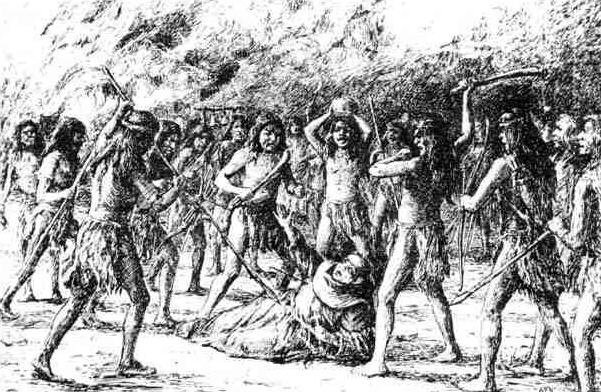
The humble St. Junipero Serra likely prayed these same Hours for the Dead after his fellow Majorcan Franciscan, Father Luis Jayme, was brutally killed at the hands of the Kumeyaay Indians following the burning of Mission San Diego in 1775. Father Jayme is now buried under the sanctuary of the current mission, and it would be profitable to pray for his future canonization as Protomartyr of California. 

When the Kumeyaay came with their clubs, stones, and
arrows, Father Luis Jayme greeted them with the
traditional Franciscan invitation to love God.

As Father Luis Jayme was martyred at the hands of enraged native warriors for conducting his ministry, so was an Oratorian on the path to sainthood martyred at the hands of cruel soldiers during the Spanish Civil War. The Blessed Salvio Huix Miralpéix, Cong. Orat., was Bishop of Lleida in Spain when he was imprisoned by the Spanish leftists along with other priests and laymen. During his time in prison, he continued to provide the sacraments, and when the leftists decided it was time for the good bishop to die, they brought him out to the cemetery so that he would dig his own grave. The leftist soldiers tried to make the Blessed Salvio renounce the faith to save his earthly life, but the bishop refused, instead choosing to be the last to die among the prisoners so that he could bless each one. Despite having his right arm shot by one of the soldiers to interrupt the blessings, the bishop continued with his left arm until the soldiers finally shot him in the head. Father Luis, Blessed Salvio, and the Martyrs of both the Spanish Civil War and the Cristero Wars serve as great examples for Catholics today to stand strong in the face of persecution by earthly powers.

Blessed Salvio Huix, an Oratorian


In Passiontide

The Brothers' last set of exercises was prayed on the Friday in Passion Week (also called the Friday of Sorrows), and thus, the illuminated crucifix was veiled in the violet cloths specific to Passiontide. The darkness of Friday Exercises was made more apparent by the hiding of the figure of Our Lord, the Light of the World, from the eyes of those praying before the Cross. At the conclusion of Exercises, the Brothers were now only five days away from the beginning of Tenebrae.


Photos and Flyers: Gabriel, Martin
Art Courtesy: Unknown artists

  • The sketch of the martyrdom Fr. Jayme is from The Journal of San Diego History via Wikipedia.
  • The portrait of Blessed Salvio Huix, C.O., was obtained via the Birmingham Oratory

Friday, July 28, 2023

Garden Exercises in Summer


According to Fratellino, a certain fellow at the Oratory in London has described the Salve Regina as "the sound of summer." With it now being the middle of summer, the Brothers in San Diego have resumed the regular observance of the "Garden Exercises" as our prayer before the start of practice. Just as the singing of the Salve Regina begins on Trinity Sunday (and therefore after the Summer Ember Days), the Brothers' observance of the Garden Exercises begins around the time of Corpus Christi.


The "garden" aspect of the Garden Exercises comes from the location of their observance. An outdoor area with vegetation and a depiction of Our Lady are standard for a location. Usually, the Brothers observe the Garden Exercises in places such as a brother's yard. At our most recent meeting, we prayed next to the statue depicting St. Anne reading to the child Mary, which was still on its processional platform in the St. Anne Catholic Church courtyard. Since the St. Anne Fiesta was celebrated the day before, the platform was still decorated with pleasant-smelling flowers, making the location an ideal "garden" space. 

Oratory of Sunday Afternoon

The cursus for Garden Exercises is a recited version of the Oratory of Sunday Afternoon found in the Brothers' manuals. The Litany of the Loreto is prayed, followed by Paters and Aves prayed for things such as the reception of the gift of perseverance, prelates and rulers, and the conversion of sinners. The faithful departed are also commemorated with a Pater, Ave, and Requiem aeternam. The Sub tuum praesidium is then prayed along with the versicle "Ora pro nobis Sancta Dei Genitrix" and the collect "Defende quaesumus." The petitions are comparable to the Simple and Ferial intercessions found in the regular Divine Office, the Suffrage Antiphons at Lauds and Vespers, and the petitions found in the Rogationtide Litanies. 


As at the Divine Office (except at Matins and Compline), the versicle "Dominus det nobis..." is prayed before the singing of the Salve Regina. Following the Marian antiphon's corresponding versicle and collect, another Pater & Ave are prayed along with "five times the Most Holy Names of JESUS" for the final set of intentions. Each recitation of the Most Holy Name by the Brothers is accompanied by the beating of the breast. The last set of intentions includes praying for the absent brethren, a petition also found in the Divine Office that attests to the communal nature of praying the Canonical Hours. Lastly, as at the normal Divine Office, the prayer formerly closes with the Divinum auxilium